Understory, Fall 2026—Issue I (Digital Edition)
WHY MAMA CRIES WHEN IT RAINS
by Harrison Udeh
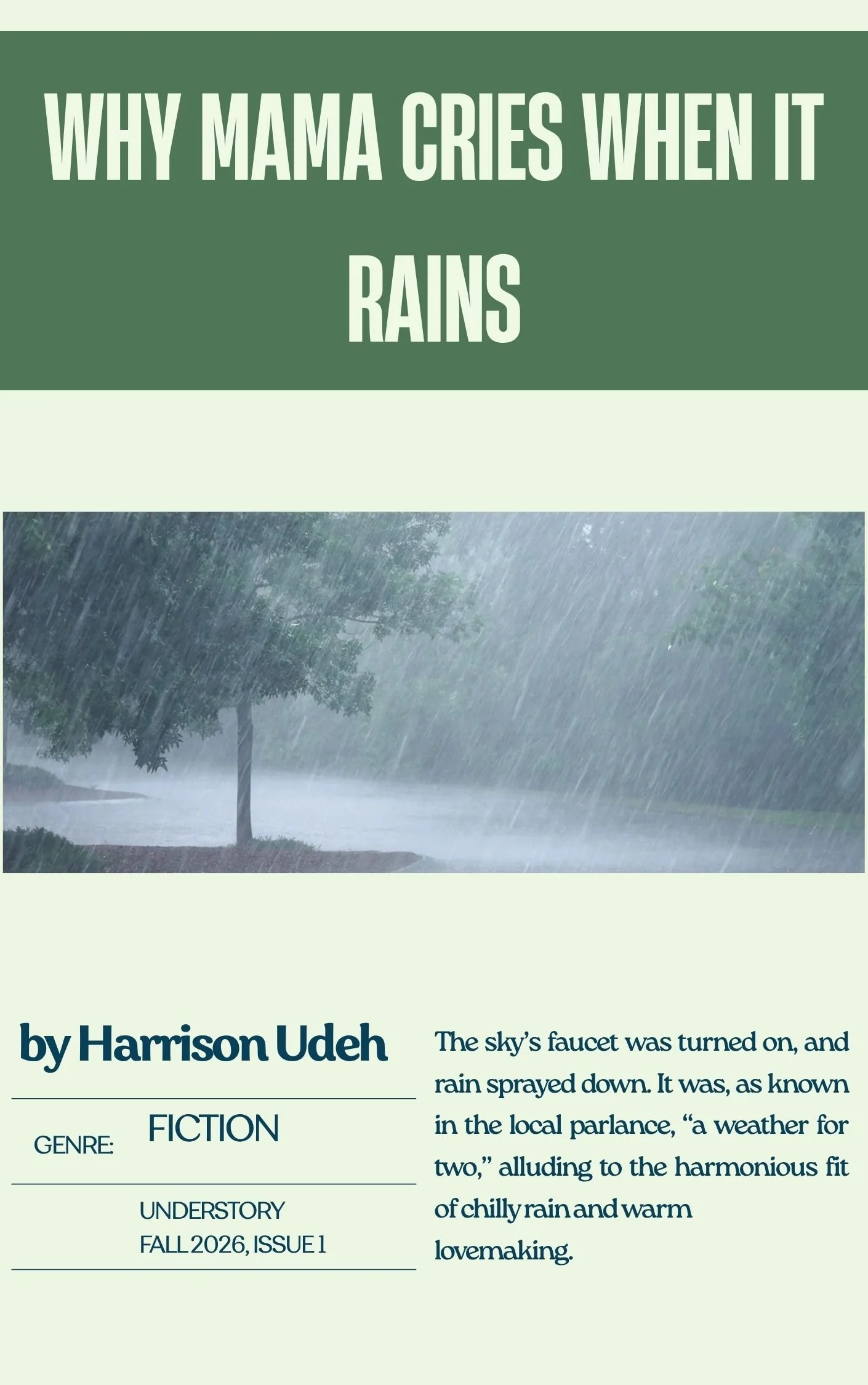
The sky's faucet was turned on, and rain sprayed down. It was, as known in the local parlance, “a weather for two,” alluding to the harmonious fit of chilly rain and warm lovemaking.
Light and darkness bathed naked underneath the falling waters with each lightning flash. Their bath floor was a beautiful mosaic of aluminium, asphalt, and rusty, brown, poverty-stained rooftops.
Onochie Street was deserted, the residents sheltering from the pelting rain and naked hues.
Except for two residents.
One, a newly dead body, secreting a bright stream of blood.
The other, a wife, with newly blackened eyes and a freshly reddened knife, secreting hot tears.
The wife was my Mama.
Mama’s fights with Papa were a routine fixture of our daily life, in the squalor of our one-bedroom apartment. That room housed five children who breezed through it like a mass of clothes draped on a clothing hanger. My four younger siblings ran in frenzied games to distract themselves from the pinch of hunger in their bloated bellies. Afterwards, they lay deflated, consuming sleep for breakfast and lunch, after crying to me for what to eat.
“Mummy go soon come back. She go bring food,” I would croon, pacifying them, even as my stomach grumbled. I would then tell them a story. Of lands with plenty of food, school uniforms, school playgrounds, and doting parents. A land we would soon call our own. Biafra.
Mama always came back with food. The slaps of her flattened shoes on the corridor outside the room awakened my slumbering siblings, infusing newfound energy, and they ran in circles, singing,
“Mummy oyoyo! Mmummy oyoyo!”
As my siblings gobbled the pap, and our lastborn bit into mama’s breasts, mama would narrate to me how she fought through the stampede at the relief centre, or sold the last of her priceless George wrappers to obtain the cornmeal.
Like our last-born, we all suckled from mama’s slack, industrious breasts, including Papa. Papa spent the daytime hiding in the bushes from the Biafran soldiers who prowled the streets, and banged on doors, looking to conscript men, the young and the aged alike. At night, he appeared like a wraith, with eyes reddened from the locally produced gin, and demanded food and money. When Mmama wasn’t cooperating, he beat the coins and pap out of her.
“Oluoma!!!” Mama called, as she sprang into the room with eyes glazed in shock, and hair matted from the rain.
“Wake your siblings up, quick, quick!”
“Pack your load! We are moving now!”
“What of Ppapa?” I quizzed. Mama shot me a lightning bolt stare that frightened the curiosity out of my mind.
Under the rain, we trudged along, through dense shrubbery, serenaded by the clashing orchestra of the night’s animals and the distant rattle of gunfire. We were headed for the border, from where we would steal away to Camerooun. Mama had taken that route every market day to buy clothes and food to be smuggled for sale in the war-ravaged Biafran capital of Enugu. She pranced with an air of firm resolve and an innate understanding of the terrain, glancing left and right, but never behind. She gripped the hands of three of her children, two in one palm, with the fourth child strapped to her back. On her head, Mama balanced a box of our sparse possessions and the invisible weight of our predicament. As we neared the border, I saw her shoulder quiver, and soon, barely audible whimpers began escaping from her lips. When the cries of we, her children, rose higher, upon hearing Mama crack, she didn’t pinch our shoulders to quieten us.
The rain and our tears fell in harmony.
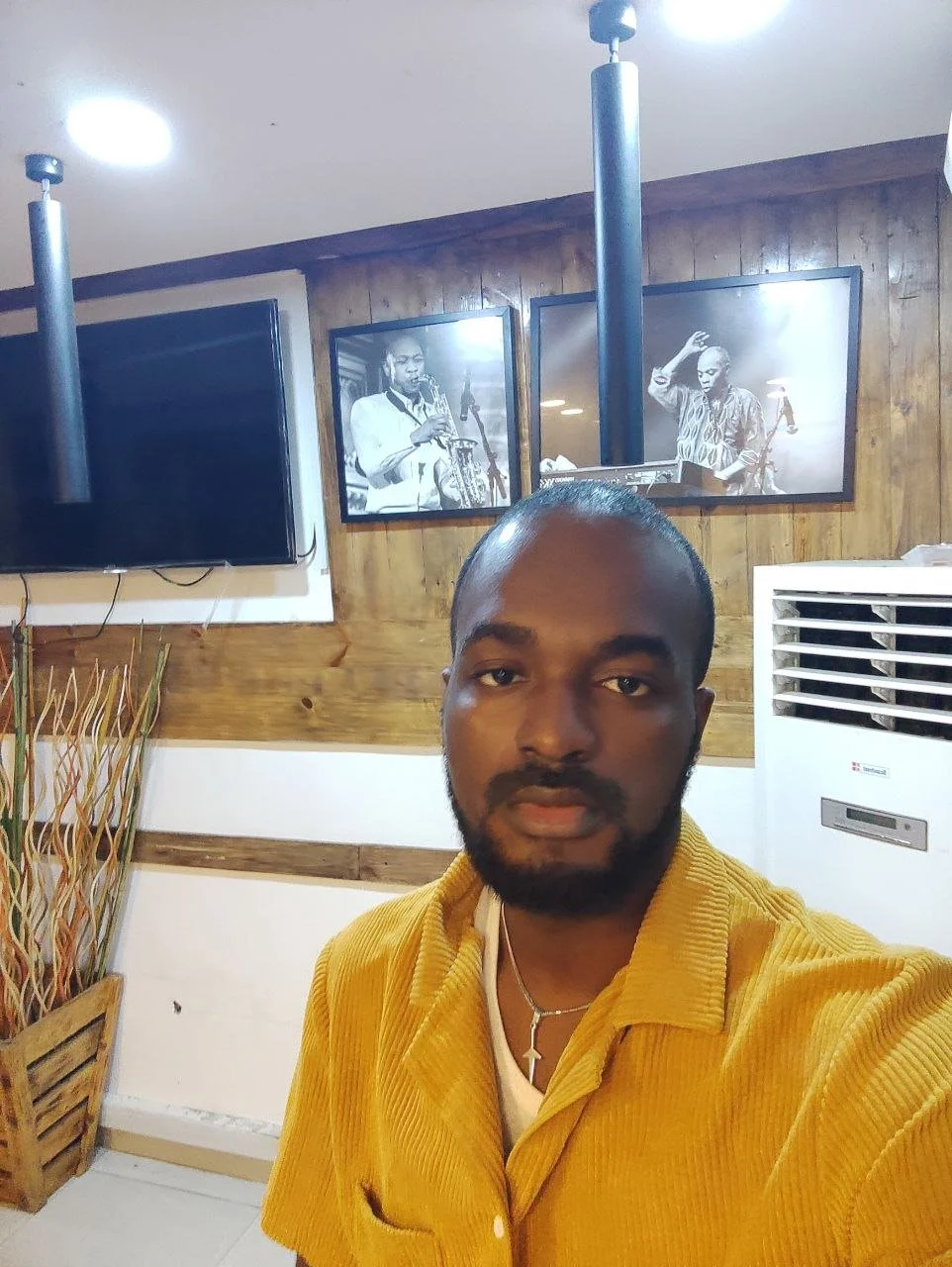
Harrison Udeh is a procrastinating writer, weaving stories that ring true and capture the exceptional tales of the average human experience. When not stealing time to pen evocative pieces, he heals through nursing practice in Nigeria. His works are featured in anthologies by Solano Publications (2020), and Poets in Nigeria (2019).